How to choose bathroom tiles: a designer’s checklist
Material, size, slip rating, grout and how much to order — the seven decisions that matter, with examples from our own projects.
In short
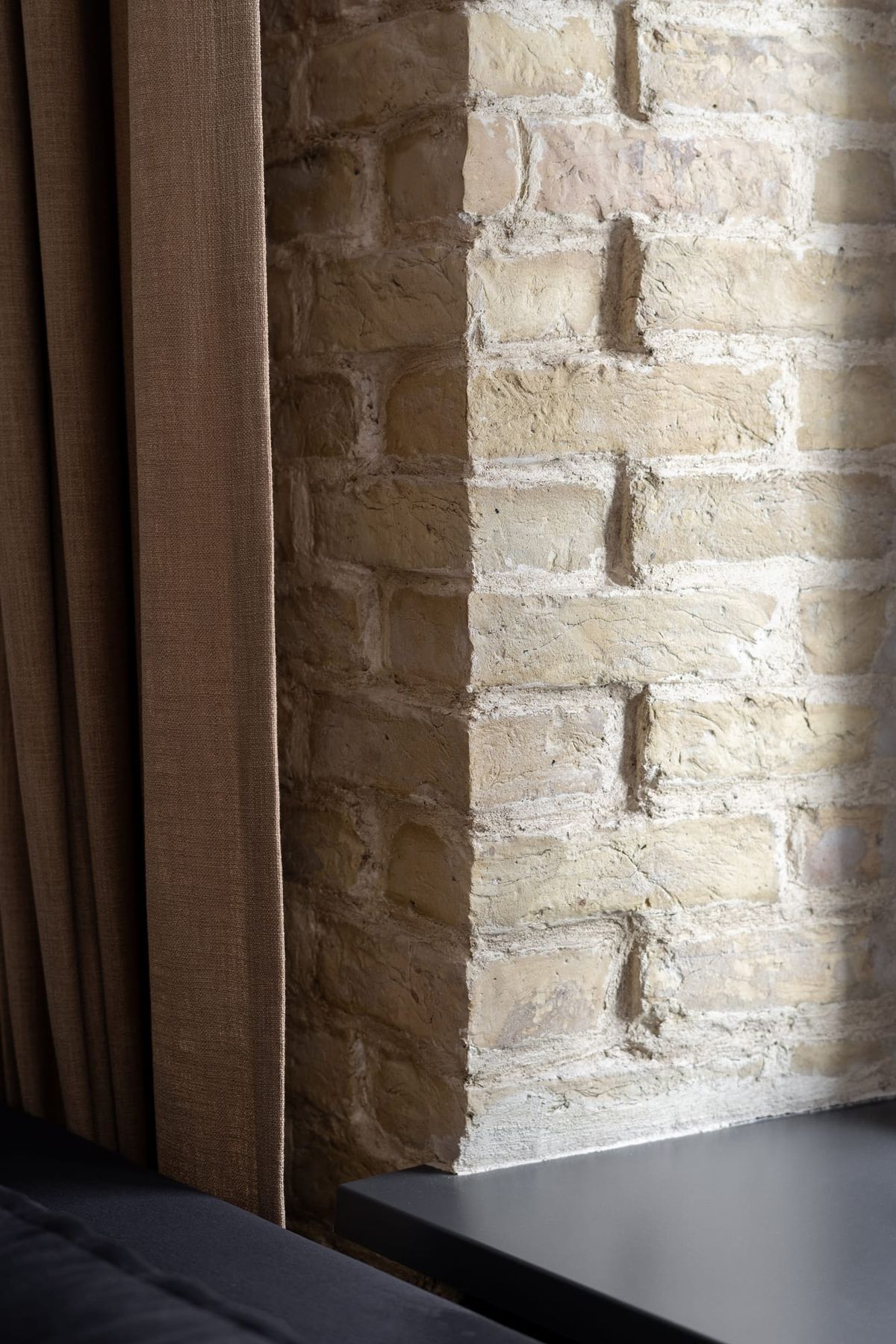
Use porcelain for floors and wet zones, check the slip rating before you look at colour, take the largest format the room can hold without awkward cuts, keep to two or three surfaces, and choose the grout together with the tile. Order 10–15% more than the measured area, all from one batch.
Not sure what suits your space?Book a free consultation
Start with the room, not the tile
Before you look at a single sample, write down four things: the floor area and ceiling height, where water actually lands (shower, bath edge, basin), whether the room has daylight, and who uses it. These decide more than taste does.
A small bathroom without a window needs lighter, matt surfaces and good lighting. A large room with daylight can carry dark stone. A family bathroom needs a floor that is safe when wet; a guest cloakroom can afford something more delicate.
Pick the material for each zone
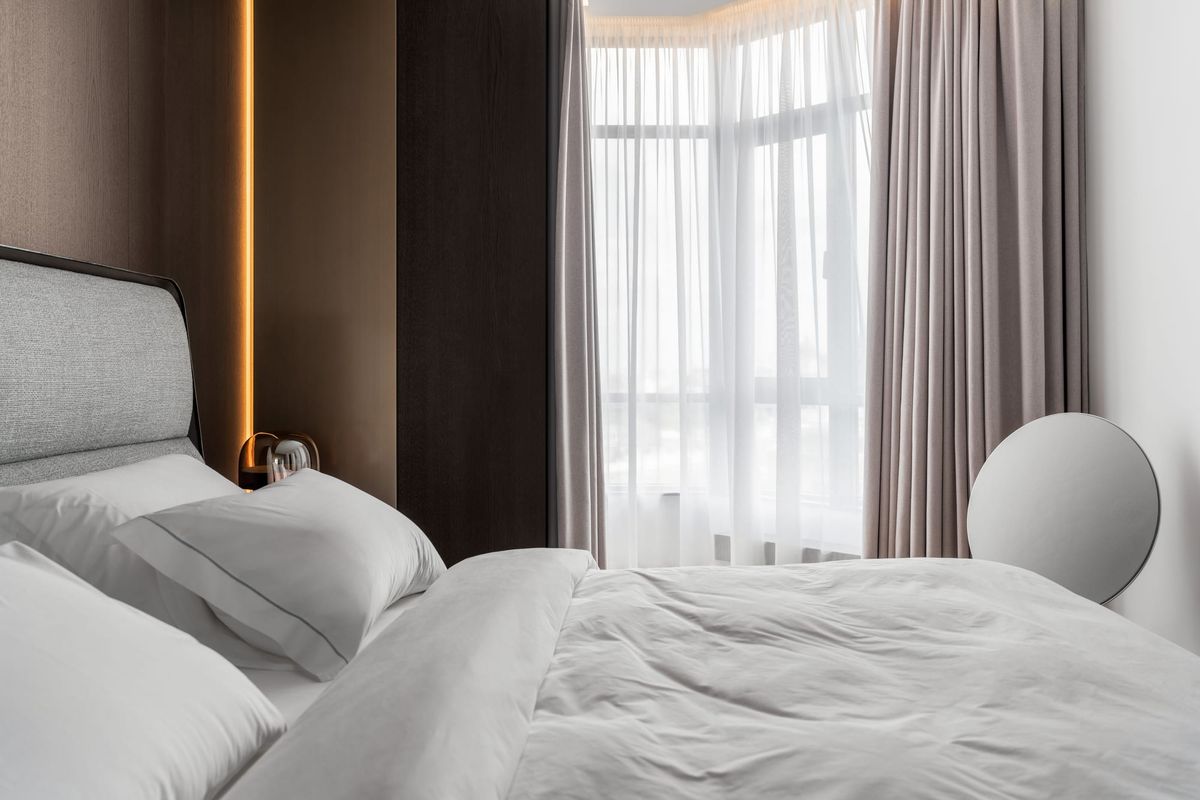
Not every tile belongs everywhere. Decide zone by zone — floor, shower, walls outside the water — and only then compare collections.
| Material | Best for | Watch out for |
|---|---|---|
| Porcelain stoneware | Floors, showers, any wet zone | Rectified edges need a precise installer |
| Glazed ceramic | Walls outside direct water | Too soft and too slippery for most floors |
| Natural stone | Walls, vanity tops, floors with care | Needs sealing; acids and hard water leave marks |
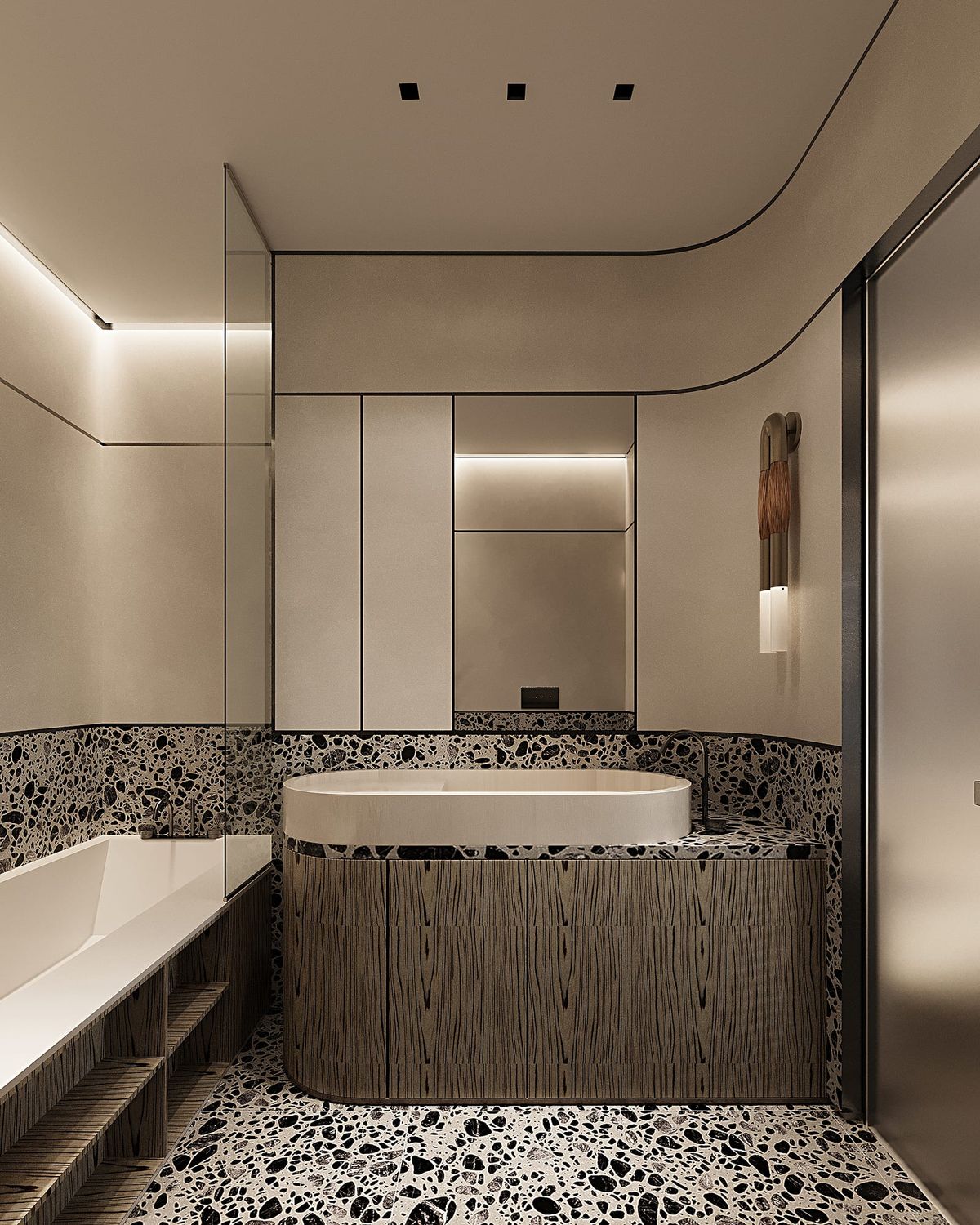
| Terrazzo | One continuous surface on floor and walls | Weight and sealing; check it is rated for showers |
| Handmade tile | A feature wall | Uneven surface, wider joints, harder to clean |
Porcelain absorbs less than 0.5% water, which is why it is the default for floors and showers. Natural stone is beautiful and ages visibly: either accept the patina or choose porcelain with a stone look.
Check the slip rating before the colour
Every floor tile has a slip rating on its data sheet. In the R scale used across Europe, R9 is for dry rooms, R10 is the practical minimum for a bathroom floor, and R11 is what you want on the floor of a walk-in shower. Tiles for barefoot wet areas also carry an A, B or C class — look for B or C in a shower.
- Bathroom floor: R10 or higher
- Shower floor: R11, or class B/C
- Polished finishes: walls only
- Always ask the supplier for the data sheet, not just the sample
In a shower tray, small formats and mosaic are practical as well as decorative: more joints give more grip, and small tiles follow the fall to the drain without awkward cuts.
Size and layout
Large formats — 60×120 cm and up — give fewer joints, a calmer surface and less to clean. They need a flat base and a room without too many corners. In a small bathroom a large tile still works, as long as the layout is planned so the cuts fall in the corners; a narrow strip of tile at the doorway is the most common mistake.
Direction matters too. Narrow tiles laid vertically make a ceiling read higher; laid horizontally they widen the room.
Ask for a tile layout drawing before you order. It shows every cut, how the wall joints meet the floor joints, and whether niches and fittings line up with the tile module.
Colour, finish and how many surfaces
Two or three surfaces are usually enough: a main tile, an accent and, if it differs, the floor. More than that and a small room starts to look busy.
Matt finishes hide water marks and limescale better than gloss; dark gloss shows everything. Always look at samples in the bathroom’s own light — wall tiles held upright, floor tiles flat and wet.
Grout, edges and details
Grout is part of the design, not an afterthought. A colour close to the tile gives a calm surface; a contrast colour draws the grid and shows every uneven line. In showers use epoxy grout: it does not absorb water and resists mould.
Rectified tiles allow joints of about 2 mm. Decide how external corners are finished — mitred, a slim metal profile or a bullnose tile — before the tiler starts, not on the day.
How much to order
- Measure every surface and subtract doors and windows.
- Add 10% for a straight layout.
- Add 15% for diagonal or herringbone layouts and for large formats with many cuts.
- Check that all boxes share the same batch (shade) and calibre.
- Keep a few spare tiles for future repairs.
Common mistakes
- Choosing from a showroom photo instead of a sample in your own light
- A polished tile on the floor
- Too many different tiles in one room
- No layout drawing — and thin slivers of tile at the edges
- Ordering the exact area with no reserve
- Niches, drains and accessories that ignore the joints
- Choosing the grout last
Questions people ask
Can I use the same tile on the floor and the walls?
Yes, if it is rated for floors. One tile throughout makes a small room calmer. Many collections come in two finishes — a grip finish for the floor and a smooth one for the walls.
Do large tiles work in a small bathroom?
Yes. Fewer joints make the room look bigger, provided the cuts are planned. Avoid very large formats if the walls are uneven or broken up by many boxed-in pipes.
Is natural marble practical in a bathroom?
On walls and vanity tops, yes, with sealing. On floors and in showers it will mark over time — some people like that patina. If you want no maintenance, choose porcelain with a stone look.
How many different tiles should a bathroom have?
Two or three: a main tile, an accent and, if needed, a separate floor tile.
Which tile is easiest to keep clean?
Large-format porcelain in a matt or satin finish, with epoxy grout in the wet zones.
Projects in this story
More from the journal
- Interior design for a rental apartment: three Kyiv examples
- Small restaurant design: several formats in 150 m²
- Working with a London contractor from abroad: what the drawings must contain
- Mountain house interiors: materials that age well in the Alps
- Prince Arthur: an English pub with a Spanish soul
- Working with a design studio from another country
- Designing inside historic buildings